
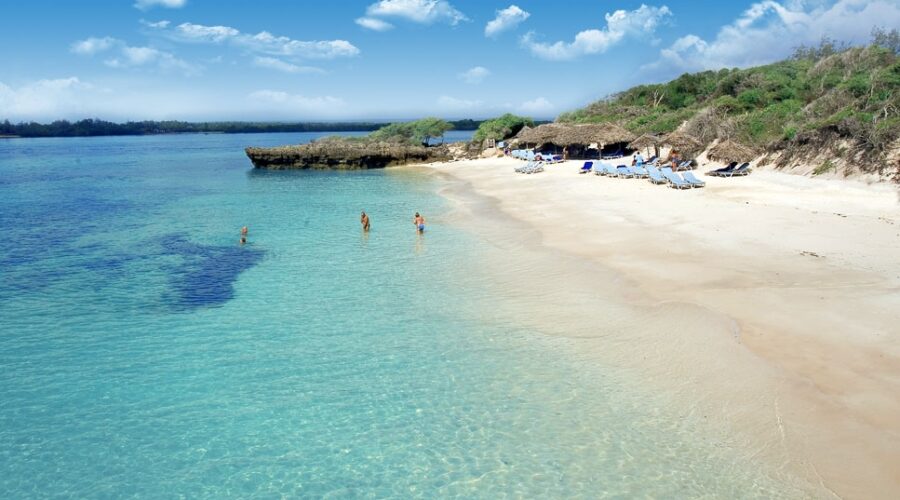
Why Watamu Should Be Your Next Beach Escape
Watamu is Kenya’s most quietly extraordinary coastal destination — a compact village in Kilifi County where a UNESCO Biosphere Reserve, Kenya’s oldest marine national park, and some of East Africa’s finest white sand beaches occupy the same twenty-minute tuk-tuk radius. Accommodation starts from KES 3,500 a night. Snorkelling costs from KES 1,450. The Indian Ocean stays at 26–29°C year-round. Here is why it should be your next beach escape — and everything you need to plan the trip.
What makes Watamu special
Watamu punches above its weight in a way that catches most first-time visitors off guard. This is not a polished resort destination with a manicured beach strip and international hotel chains. It is a real place — a small Swahili coastal village that has quietly accumulated one of the most compelling concentrations of natural and cultural experiences on the entire East African coast. The Watamu UNESCO Biosphere Reserve covers 32,000 hectares of ocean, reef, and forest. Kenya’s oldest marine park protects 10 square kilometres of coral reef directly offshore. One of East Africa’s largest remaining coastal forests sits four kilometres inland.
And yet the pace is unhurried. Tuk-tuks clatter down sandy lanes. Fishermen drag hand-nets across the shallows at low tide. The Italian expat community that settled here decades ago left behind a legacy of genuinely excellent coastal cooking. It is the kind of place where you book four nights and leave after ten.
The beaches
Watamu has three connected bays — Watamu Bay, Blue Lagoon, and Turtle Bay — each with a distinct character. The offshore coral reef creates natural protection that keeps the water calm, clear, and extraordinarily safe for swimming year-round. Turtle Bay is the most sheltered: at high tide it is a deep, glassy lagoon popular with snorkellers; at low tide the retreating water reveals kilometres of natural rock pools alive with clownfish in sea anemones, hermit crabs, sea urchins, and starfish — one of the best free experiences Watamu offers.
Blue Lagoon is slightly wilder and less visited, preferred by those who want space and solitude. Both are significantly quieter than Diani — beach hawkers are rare and no one will follow you down the sand trying to sell boat trips. The water temperature stays between 26°C and 29°C year-round, and the powder-white coral sand rarely gets uncomfortably hot underfoot even in peak season.
Tide tip: Check local tide times before visiting the rock pools — the best exploration windows are 1–2 hours either side of low tide. Bring water shoes and reef-safe sunscreen. The rock pools are completely free to explore with no guide required.
Marine park & water activities
Watamu Marine National Park is Kenya’s oldest marine protected area, established in 1968. It covers 10 square kilometres of coral reef within the Biosphere Reserve and is one of the most intact reef systems on the East African coast. In the dry season (July–October), snorkelling visibility regularly reaches 10–20 metres. Sea turtle encounters — Green and Hawksbill — are almost guaranteed. Over 600 fish species have been recorded in the park.
Park entry for non-resident adults costs KES 1,450 and KES 750 for children. Glass-bottom boat hire starts from KES 1,500 per person for a shared trip — ideal for non-swimmers and young children. Guided snorkel trips start from KES 2,950 all-in. Book through a licensed local operator; the reef knowledge difference between a licensed guide and an unlicensed one is significant.
Beyond the park, Watamu is Kenya’s leading kitesurfing destination. The wide, shallow lagoon at Watamu Kite Beach and reliable Indian Ocean trade winds from June to October create near-perfect conditions for beginners and advanced surfers alike. IKO-certified beginner courses run 2–3 days from KES 15,000 per person. Sunset dhow cruises with Swahili Sails start from KES 2,500 per person and are one of the most reliably beautiful evenings on the Kenya coast.
| Activity | Price from | Duration | Best age |
|---|---|---|---|
| Marine Park snorkelling | KES 2,950 all-in | 2–3 hrs | Ages 6+ |
| Glass-bottom boat | KES 1,500 pp shared | 1.5–2 hrs | All ages |
| Sunset dhow cruise | KES 2,500 pp | 2 hrs | All ages |
| Deep-sea fishing (boat) | KES 15,000 boat | Half day | Adults |
| Kitesurfing beginner course | KES 15,000 pp | 2–3 days | Ages 12+ |
| Mida Creek kayaking | KES 2,500 pp | 2–3 hrs | Ages 8+ |
| Mida Creek boat tour | KES 1,500 pp | 1.5–2 hrs | All ages |
| LOC Turtle Centre | KES 500 pp | 1–2 hrs | All ages |
Wildlife & nature
Watamu’s wildlife offer extends well beyond the reef. The Local Ocean Conservation (LOC) Sea Turtle Rescue Centre on Watamu Beach Road rehabilitates injured and entangled Green and Hawksbill turtles before releasing them back into the ocean. Entry starts from KES 500 per person. If your timing aligns with a release, watching a rehabilitated turtle being carried to the shoreline is one of the most genuinely moving experiences on the coast.
Four kilometres inland, the Arabuko-Sokoke Forest is one of East Africa’s largest remaining coastal forests and a globally important bird area. The forest is home to the Sokoke Scops Owl, Clarke’s Weaver, and the Amani Sunbird — species found nowhere else on earth. The Arabuko-Sokoke Forest Guides Association runs excellent guided dawn walks from the forest entrance gate, starting from approximately KES 800 per person. The best wildlife sightings happen between 6am and 8am.
At Mida Creek, 4km south of Watamu, a vast tidal inlet fringed by ancient mangrove forest provides a habitat for hundreds of bird species — herons, kingfishers, flamingos during migration, and the brilliant malachite kingfisher year-round. Guided kayaking through the mangrove channels starts from KES 2,500 per person; wooden boat tours from KES 1,500. Sunrise and sunset sessions are particularly atmospheric.
Birdwatcher’s tip: Book a guided forest walk at dawn for the best sightings and cooler temperatures. The Arabuko-Sokoke Forest Guides Association operates from the forest entrance gate on the Watamu–Malindi road. Walks start from KES 800 per person. Binoculars essential — bring your own or hire a pair from the guides for KES 200.
Top attractions near Watamu
History lovers will enjoy a day trip to the Gede Ruins, a hauntingly atmospheric 13th-century Swahili city of coral-stone palaces, mosques, and merchants’ houses that was mysteriously abandoned centuries ago and partially reclaimed by forest. Troops of Sykes’ monkeys and golden-rumped elephant shrews now inhabit the site alongside the archaeology. Non-resident entry costs KES 1,200 adults, KES 600 children. Open daily 7am–6pm. The Kipepeo Butterfly Farm is located at the entrance to the ruins — a community-run walk-through enclosure from just KES 300 per person that makes an easy morning combination.
Bio-Ken Snake Farm in Watamu Village is an internationally recognised antivenom research centre housing over 50 Kenyan snake species — black mambas, king cobras, reticulated pythons — in purpose-built enclosures. Expert-guided tours run from KES 1,000 per person, Monday to Saturday 9am–5pm. Advance booking recommended during school holidays.
| Attraction | Entry from | Best for | Distance from beach |
|---|---|---|---|
| LOC Turtle Centre | KES 500 | All ages | On Watamu Beach |
| Watamu Marine Park | KES 1,450 adults | Ages 4+ | Watamu Beach |
| Gede Ruins | KES 600 children | Ages 5+ | 2km inland |
| Kipepeo Butterflies | KES 300 | All ages | 2km inland (Gede) |
| Bio-Ken Snake Farm | KES 1,000 | Ages 6+ | Watamu village |
| Mida Creek | KES 1,500 (boat) | All ages | 4km south |
| Arabuko-Sokoke Forest | KES 800 (guided walk) | Birdwatchers | 5km inland |
| Swahili Sails Dhow | KES 2,500 pp | All ages | Watamu Beach |
See the complete kids’ activities guide for full details on every venue including opening hours and booking advice.
Accommodation & dining
Watamu’s accommodation covers every budget without sacrificing the character that makes staying here special. At the luxury end, Medina Palms (from KES 25,000/night) is a beachfront estate with an infinity pool widely regarded as Watamu’s finest property. Hemingways (from KES 15,000/night) offers eco-certification and ocean views. In the mid-range, Turtle Bay Beach Club (from KES 8,000/night) and Temple Point Resort (from KES 7,500/night) are the most established options. At the budget end, Mida Creek Eco Camp (from KES 3,500/night) is an outstanding eco-certified choice.
On the dining side, fresh seafood is the star — a whole grilled crayfish at a beachside restaurant costs approximately KES 1,800–3,500. Watamu’s Italian expat community has left a legacy of genuinely excellent pasta and pizza restaurants, with main courses from KES 800–1,800. For the most authentic and affordable Swahili coastal cooking, the local mama mboga stalls in Watamu village serve fish stew, pilau rice, and coconut bean soup for KES 200–500. Local restaurant meals average KES 500–1,500 per person; beachfront restaurants KES 1,200–2,500.
Getting to Watamu
Watamu is approximately 105km north of Mombasa and 20km south of Malindi. The most convenient approach from Nairobi is to fly into Malindi Airport (MYD) and transfer south, or to fly into Mombasa and drive north on the B8 coastal road (2.5–3 hours). From Malindi, taxis cost KES 1,500–2,500 and tuk-tuks KES 500–800 for the 20-minute transfer south to Watamu.
| Route | Mode | Duration | Cost from |
|---|---|---|---|
| Nairobi → Malindi (fly) | Airkenya / SafariLink | ~1 hour | KES 9,000 one way |
| Nairobi → Malindi (bus) | Modern Coast / bus | 8–10 hours | KES 1,200–2,500 |
| Malindi Airport → Watamu | Taxi | ~20 mins | KES 1,500–2,500 |
| Malindi Airport → Watamu | Tuk-tuk | ~25 mins | KES 500–800 |
| Mombasa → Watamu (drive) | Car / matatu | 2.5–3 hrs | KES 500–1,500 matatu |
| Nairobi → Mombasa (fly) | Kenya Airways / Jambojet | ~1 hour | KES 5,000–12,000 |
| Within Watamu | Tuk-tuk | Any journey | KES 100–400 |
Once in Watamu, tuk-tuks are the main local transport at KES 100–400 per journey — cheap, safe, and universally loved by children. Boda-bodas (motorcycle taxis) are faster and cost slightly less. Car hire from Malindi is available from approximately KES 4,500 per day for a compact 4×4, which is useful for day trips to Arabuko-Sokoke or further afield.
Best time to visit Watamu
Watamu sits on the Kenya coast and follows a tropical climate with two monsoon seasons. The best time to visit is July to October — the long dry season. The Indian Ocean is at its calmest, snorkelling visibility in the Marine Park peaks at 10–20 metres, kitesurfing winds are consistent, and wildlife activity in the forest and creek is high. This is peak season: book accommodation 6–8 weeks ahead and expect 20–40% higher rates.
December to March is the second-best window — warm, relatively dry, and lively with Kenyan and European holiday travellers. January and February in particular combine good weather with slightly lower pressure on availability. April to May (long rains) and November (short rains) bring the least reliable beach conditions, but the lowest prices and emptiest beaches — some experienced travellers actively prefer these months.
| Season | Months | Weather | Snorkelling | Price level |
|---|---|---|---|---|
| Long dry season | July–October | Dry, sunny, 28–32°C | Best (10–20m vis) | Peak |
| Short dry season | Jan–March | Warm, mostly dry | Very good | High |
| Short rains | November | Patchy rain | Variable | Mid-low |
| Long rains | April–May | Wet, humid | Lower | Lowest |
| Transitional | June, Dec | Variable | Good | Mid |
Year-round certainty: The LOC Turtle Centre, Bio-Ken Snake Farm, Gede Ruins, and Kipepeo Butterfly Farm all operate year-round regardless of weather. Even during the rains, Watamu’s indoor and forest attractions remain fully accessible — making it a more weather-resilient destination than purely beach-dependent options like Diani.
Quick picks — best of Watamu by traveller type
Use this guide to identify the ideal Watamu experience for your travel style: